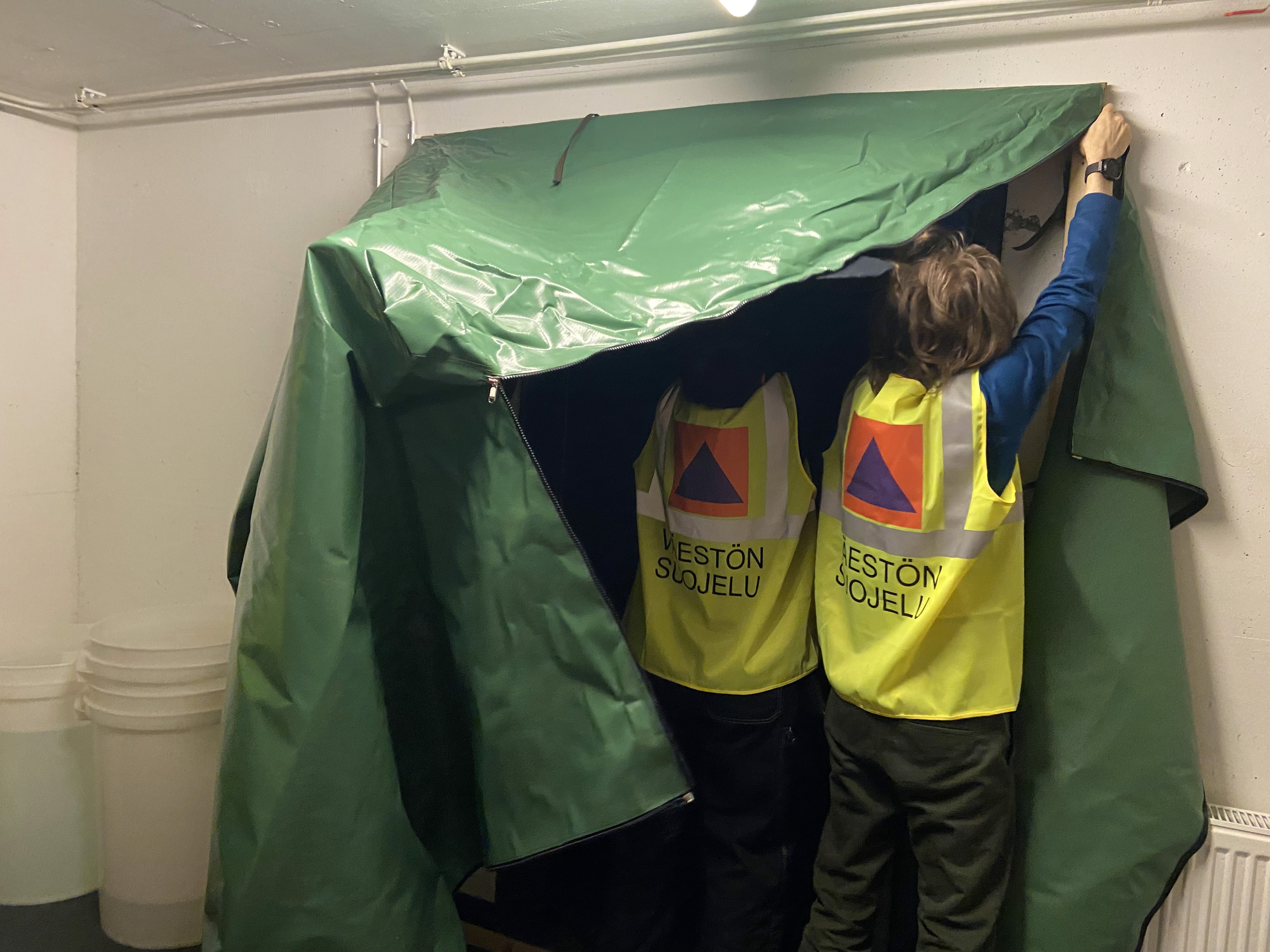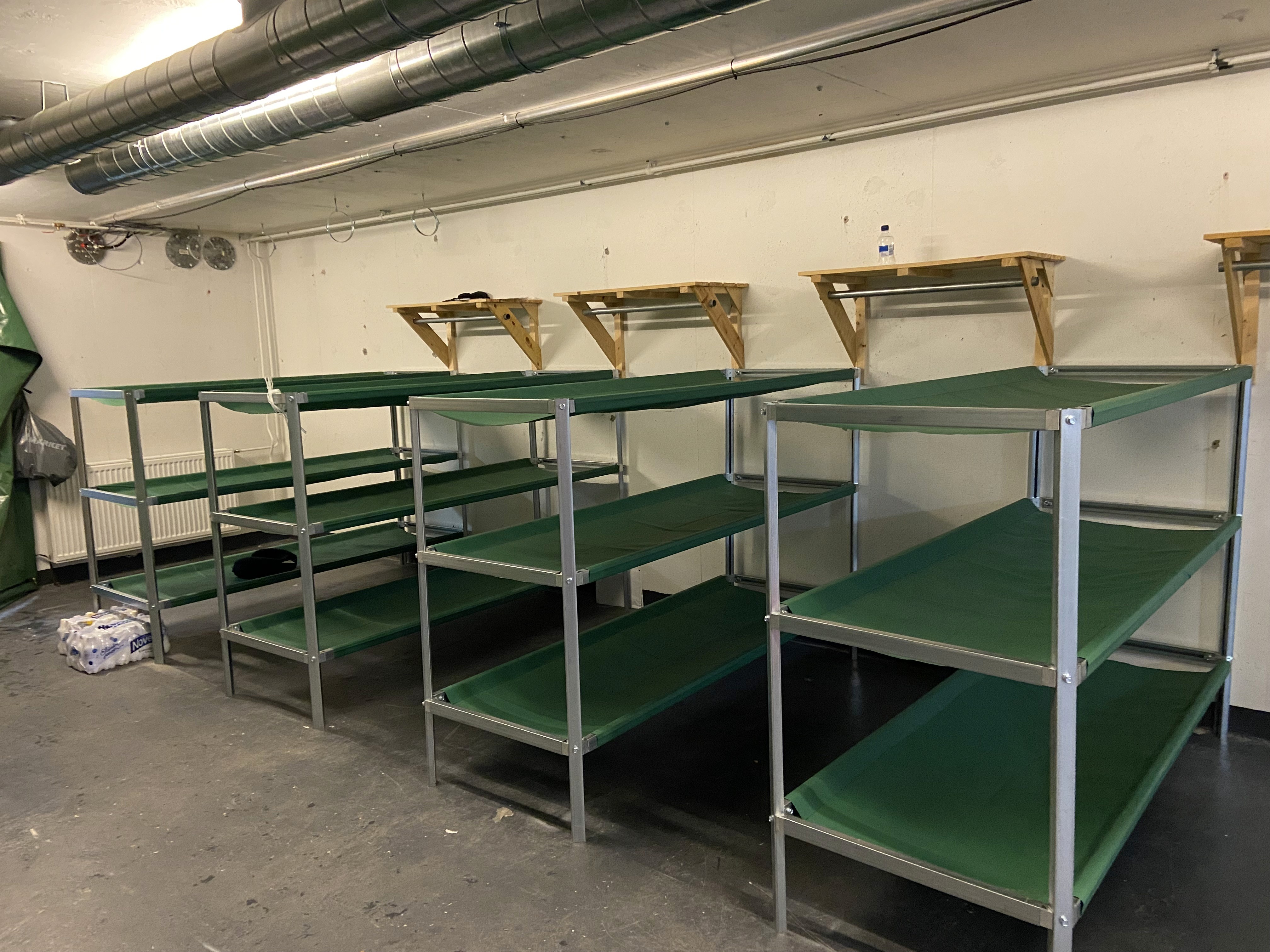
The SUOJA2026 exercise, carried out in early 2026, was an exceptional opportunity to test the functionality of a civil defence shelter. In the exercise organized by the Helsinki Rescue Association (Helsingin Pelastusliitto) and The apartments of Heka (Helsingin kaupungin asunnot Oy), volunteer residents activated a civil defence shelter located in a Heka rental building within 72 hours and stayed in the shelter for 24 hours.
The exercise provided valuable information on the operation of civil defence shelters and the experiences of those taking shelter. The aim was to test in practice how a typical residential building storage space can be converted into a shelter and how people operate in a sheltering situation.
For Temet, participation was not merely a collaborative project, but also an opportunity to test and develop our own expertise and products where it matters most, in real-life use. In addition to existing products, we supplied shelter beds and replaced the filters used in the test with new CBRN filters.
Data Provides Valuable Insights
In Finland, civil defence shelters are technically highly advanced, but there is less information about how they perform in real crisis situations. One of the most significant achievements of the SUOJA2026 exercise was the collection of measured data.
The shelter was equipped with monitoring and measurement devices, enabling the tracking of technical variables and user experience. This provided a valuable opportunity to analyse ventilation performance under real load, the development of conditions (temperature, carbon dioxide levels, pressure) over time, and the usability of systems and equipment.
However, the most important lesson from the exercise related to people. Around 40 volunteer residents participated in activating and using the shelter. They were not rescue professionals, but ordinary residents, the same people who would need to rely on the shelter in a real situation.
This highlighted two key themes. Shelters must be intuitive, and instructions must be clear. There is no value in technology if people don’t know how to use it. Regular training helps to address this. From Temet’s perspective, this also means that product design cannot focus solely on technical optimization. Solutions must also be easy to understand and quick to deploy. Additionally, shelters must be kept operational with proper maintenance, including their equipment and products.
A Functional System Requires Cooperation
SUOJA2026 was implemented through extensive cooperation involving the Helsinki Rescue Association, The apartments of Heka (Helsingin kaupungin asunnot Oy), Temet Group Oy, Safetum Oy, VTT Technical Research Centre of Finland Ltd, and Laurea University of Applied Sciences.
The exercise demonstrated that civil defence is not the responsibility of a single actor and requires regular training. It is a system in which property owners, authorities, technology providers, and residents work together.
A big thank you to the organizers for the valuable lessons, which we will also apply in our own operations!
More information and sources:
SUOJA26 Jälkitiedote medialle
https://www.helpe.fi/wp-content/uploads/2026/01/SUOJA26-Jalkitiedote-medialle.pdf
Images: The apartments of Heka (Helsingin kaupungin asunnot Oy)